

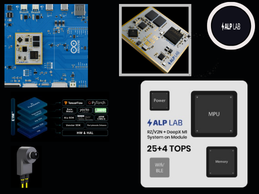
Why edge AI matters
Edge AI is transforming how machines perceive, decide, and act in real time. For robotics, processing data on-device reduces latency, enhances safety, and enables autonomous operation in environments where cloud connectivity is limited. In manufacturing, on-site AI improves throughput, optimises energy Best Edge AI for robotics use, and supports predictive maintenance without sending sensitive data to remote servers. Businesses seeking practical advantages should evaluate compute density, model efficiency, and software ecosystems that align with their specific robotic and production tasks.
Evaluating hardware platforms
The best edge solutions balance performance with power consumption and ruggedness. Look for systems with accelerators tailored to neural networks, such as dedicated AI chips or FPGA-based designs, paired with reliable I/O for sensors, cameras, Best Edge AI for manufacturing and actuators. Reliability under factory conditions is essential, so consider environmental ratings, heat tolerance, and long-term supply. Compatibility with popular AI frameworks also matters for future updates and talent continuity.
Software and model considerations
Efficient models matter as much as powerful hardware. Techniques like quantisation, pruning, and knowledge distillation help models run fast on edge devices without sacrificing accuracy. Frameworks that support edge deployment, easy version control, and robust debugging tools streamline maintenance. When planning for scale, ensure your software stack enables modular upgrades and seamless over-the-air updates across multiple robotic units or production lines.
Case studies and practical deployment
Real world deployments show how edge AI can cut cycle times, reduce downtime, and increase yield. For example, vision systems on robotic arms can identify defects immediately, while edge-based analytics monitor vibration and temperature to forecast failures. Successful projects emphasize a clear data strategy, from on-device inference to cloud-backed analytics, with strict security and access controls to protect sensitive intellectual property.
Implementation roadmap and risk management
Start with a pilot that targets a single use case, such as a robotic pick-and-place task or a line-side anomaly detector. Define metrics for latency, accuracy, and uptime, and set a realistic timeline for hardware, software, and personnel readiness. Prepare for supply chain delays by selecting hardware with multiple vendors and establishing a support plan. Governance around data, privacy, and safety ensures responsible adoption across manufacturing floors.
Conclusion
Adopting the right edge AI strategy demands careful alignment of hardware, software, and use cases. The goal is reliable, low-latency inference that keeps systems responsive under variable conditions, while protecting data and enabling scalable growth. Alp Lab